IT & AIArtificial intelligence
Generative AI: what are the new technologies?
· Michel Aguilera

We recently had the opportunity to talk about Microsoft Copilot in a previous article. We are going to dig deeper into the subject by looking at the various other competitors in the generative AI market. A dive into artificial intelligence and the main players of the moment.
AI… or not? Food for thought.
Artificial intelligence (AI) is a field that aims to create machines capable of performing tasks normally reserved for humans, such as image recognition, translation, speech synthesis or text generation. Among the various AI techniques, generative AIs are those that make it possible to produce original content, such as images, sounds, videos or texts, from existing data or instructions. These generative AIs are increasingly used in a variety of fields, such as entertainment, education, research or development. But what tools are available to create and use these generative AIs? What are the advantages and disadvantages of these technologies? This article gives you an overview of the main generative AIs, with a focus on text generation, and compares two recent tools: Copilot and Google Gemini. A short demo video of Gemini:
What is a generative AI?
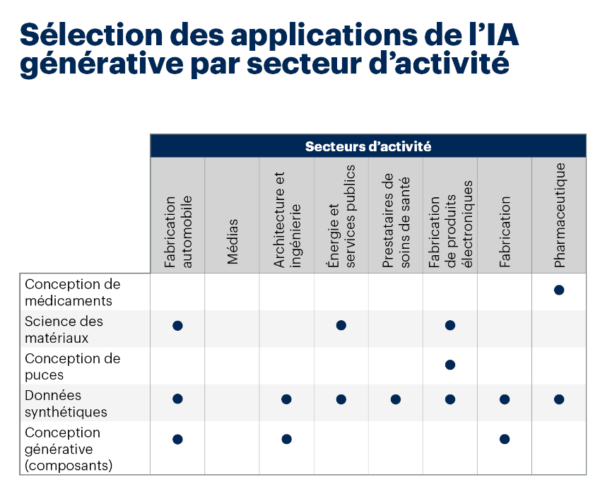
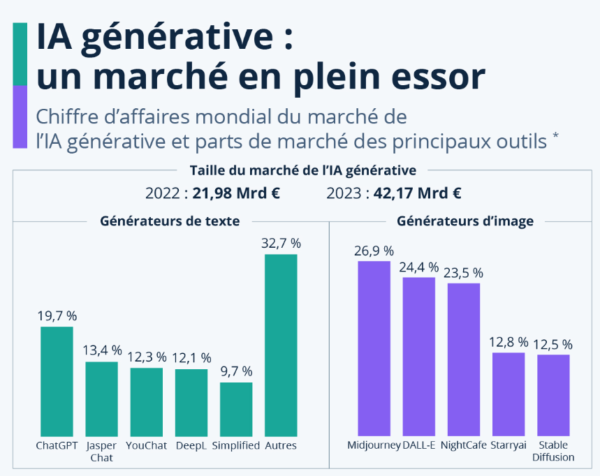
A generative AI is a type of AI that uses machine learning algorithms to learn from existing data and to generate new data with the same characteristics. For example, a generative AI can learn from thousands of photos of human faces and produce new images of faces that do not exist but look realistic. Likewise, a generative AI can learn from thousands of texts on a given subject and produce new texts that respect the grammar, vocabulary and style of the subject. Generative AIs often use artificial neural networks, which are computer models inspired by the way the human brain works and which are able to adapt their parameters according to the data they receive. There are different types of artificial neural networks, such as generative adversarial networks (GANs), variational autoencoders (VAEs) or recurrent neural networks (RNNs). Today we can see that the use of AI is growing in various sectors, as shown in the illustration below:
What are the advantages and disadvantages of generative AI?
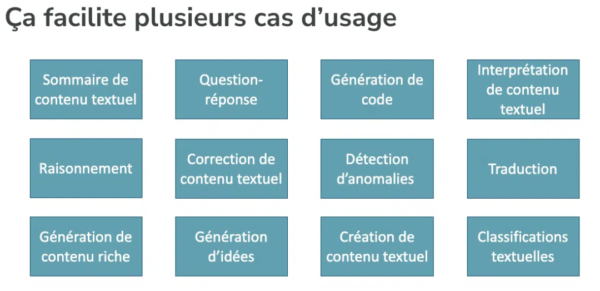
Generative AIs have advantages and disadvantages, which depend on how they are used and how reliable they are. The advantages of generative AIs are that they can save time, stimulate creativity, personalise content, diversify sources or solve complex problems. For example, Copilot can help developers code faster and more easily, saving them from searching for solutions on the Internet or reinventing the wheel. Google Gemini can help writers produce web content that is more attractive and better suited to their audience, by offering them suggestions and alternatives. The disadvantages of generative AIs are that they can raise problems of ethics, quality, security, intellectual property or liability. For example, Copilot can generate code that contains errors, vulnerabilities, biases or licence violations. Google Gemini can generate text that contains mistakes, inconsistencies, plagiarism or false or misleading information. It is therefore important to check and validate the content produced by generative AIs, and to respect the rules of good practice and professional ethics. The use cases are many:
Today, the main problem remains finding or interfacing several AIs in order to cross-check the answers these various AIs can generate. There is an interface that provides a way of creating an aggregate: Poe AI.
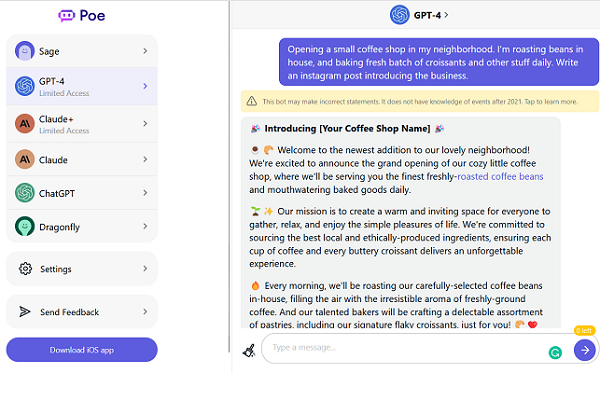
Poe AI is a website (and an app) that allows users to chat with artificial intelligences (AIs) with different capabilities and personalities. Users can sign in with their Google or Apple account, or use their phone number. Once signed in, they can choose a bot from the list on offer, or create a new one. They can then start chatting with the AI by typing or speaking their message. The AI will respond according to its model, its personality and the context of the conversation. This will also help to group several results from a single interface (for example, when creating text content or other material).
In short… what should we think… or leave to the AI?
The other generative AIs on the market are less well known and less powerful than Copilot and Gemini, but they can have specific applications in certain fields. For example, there are generative AIs for speech synthesis, machine translation, facial recognition, 3D modelling, etc. You can explore these generative AIs by searching the web or by using platforms such as Hugging Face or OpenAI Playground.