Parallel networks, VPNs and other solutions
· Michel Aguilera

For a long time, the use of alternative networks or services, considered to be on the fringe of so-called commercial products, has been seen as resolutely reserved for “specialists”. I am talking about VPN solutions other than the classic NordVPN, Cyberghost and other products familiar to the general public. We are going to see that when it comes to networks and services, there is a whole range of possibilities for protecting our privacy and also maintaining a certain level of confidentiality around our communications. Discovering a world… that is not as underground as all that. Be warned, this will be an article for networking enthusiasts :)
Connecting… privately?
One of the first services we are going to look at concerns the notion of VPN. A VPN is a type of computer network that allows computers and devices to connect remotely in a secure way. A VPN is a bit like a tunnel linking two computers together over the Internet. The tunnel is protected by an encryption key, which means that the information exchanged between the two computers is protected and cannot be read by other people. VPNs are often used by companies to allow their employees to work remotely in a secure way and to access IT resources protected by a firewall, such as files or servers.
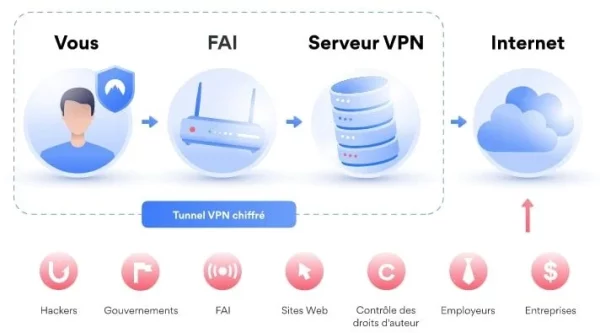
Another somewhat little-known type of network is the Tor system (often associated with the Darkweb).
The Tor network is a worldwide computer network that allows you to browse the Internet anonymously and securely. When you use the Tor network, your Internet traffic is routed through several nodes or relays before reaching its final destination. This makes it difficult for anyone to identify your IP address and track your online activity. Tor also uses end-to-end encryption to protect your traffic against interception and eavesdropping.
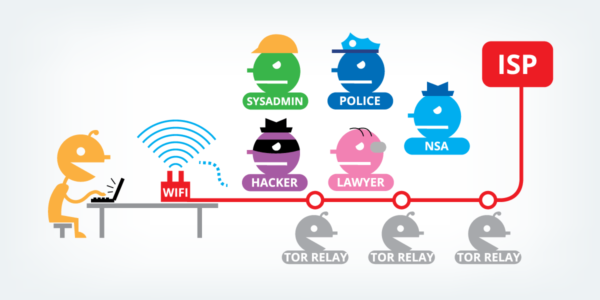
The Tor network is often used by people who need to protect their privacy and security online, such as journalists, political activists and people living in countries where Internet censorship and surveillance are common. To use the Tor network, people quite often use the browser of the same name, the Tor browser. Here is an explanatory video by Korben:
In a somewhat different approach, and so that everyone can benefit from a so-called “private” network, you would need to be able to create a link without any notion of centralisation (risk of man-in-the-middle intrusion or data theft). That is why we are going to talk about so-called “Mesh” VPNs. One example is ZeroTier.
ZeroTier uses a proprietary VPN protocol called ZeroTier One to create virtual private networks (VPNs). This protocol uses end-to-end encryption to protect data in transit on the network. ZeroTier One works by using virtual IP addresses for each device connected to the network. These virtual IP addresses are associated with a unique cryptographic private key for each device. When a device joins the ZeroTier network, it sends its private key to the central ZeroTier controller, which uses it to generate a unique virtual IP address for that device. This virtual IP address is then used to route network traffic between the devices on the network.
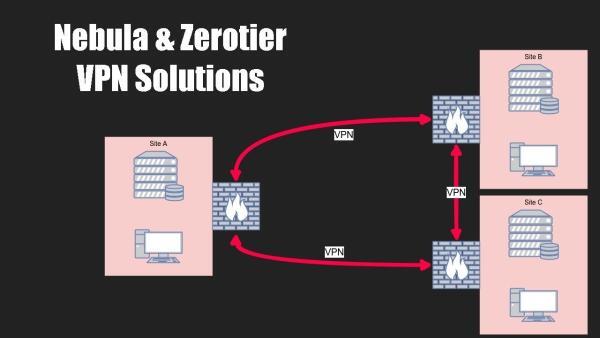
ZeroTier also uses layer 2 (Ethernet) routing techniques to enable seamless connectivity between devices on the network. This routing technique allows devices to communicate directly with each other without going through a gateway or router. This enables faster and more reliable communication between devices. The solution is also designed to work in complex network environments, such as networks with firewalls or networks with private IP addresses. To do this, it uses firewall and NAT traversal techniques to allow devices to communicate with each other without any additional configuration.
Finally, ZeroTier has a centralised dashboard for managing networks and connected devices. This dashboard makes it possible to monitor network performance, manage users and configure security settings. To understand a little how it works, here is a video (in English) that explains it in more detail:
The main difference between a classic VPN and ZeroTier is the way they create a virtual private network. A classic VPN uses a centralised server, whereas ZeroTier uses a distributed network architecture based on points of presence spread around the world. Although ZeroTier seems quite powerful, it remains aimed at people who “only” want network presentation services. There are solutions that include more possibilities, as is the case with Tailscale. You can learn how it works and what it does via their YouTube channel.
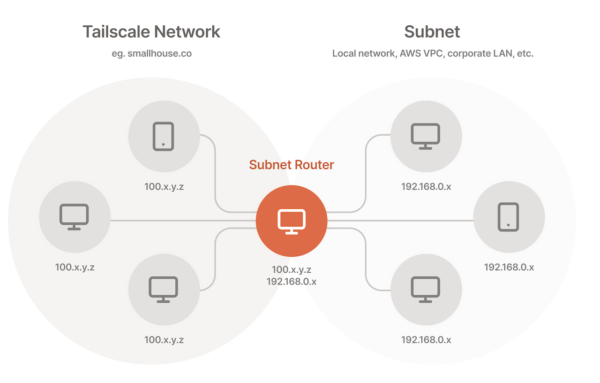
For the more technically minded, here is an in-house blog post that explains the possibilities in detail.
The service uses a security protocol called WireGuard, which encrypts the data exchanged between computers and devices to protect it against malicious attacks. Tailscale is easy to use because it is designed to work in the background without requiring complex configuration. Tailscale is designed to provide easy and secure connectivity between devices, even when they are on different networks or in different working environments. Users can access resources on other devices, such as files or printers, as if they were on the same local network. The service is also designed to be easily integrated with other cloud services, such as Google Cloud Platform, Amazon Web Services or Microsoft Azure, for centralised management of users and resources. A short descriptive video (in English):
Here are some of the main features available on Tailscale:
VPN connection: this allows users to connect to a virtual private network (VPN) securely over the Internet. Remote connection: it is possible to allow users to connect to computers and devices remotely, as if they were on the same local network. File sharing: Tailscale users can easily share files between different devices via the virtual private network (Taildrop). Shared printers: Tailscale allows users to connect to shared printers remotely, as if they were on the same local network. Access to cloud resources: Tailscale can easily be integrated with cloud services such as Google Cloud Platform, Amazon Web Services and Microsoft Azure, allowing users to access cloud resources from their computers and devices. Centralised management: Tailscale users can easily manage users and resources from a centralised dashboard. Multi-factor authentication: Tailscale supports multi-factor authentication for enhanced security when accessing the virtual private network. Integration with other security tools: Tailscale can easily be integrated with other security tools such as firewalls and threat detection solutions to strengthen the security of the network environment.
Once installed, the agent offers interactions with the other “nodes” in the same environment, which makes exchanges between the machines on the private network enormously easier. Here is another video (in English) to see Tailscale in action:
In short, we’re connected… but are we secure?
As you could see in Korben’s video a little further up, one essential recommendation is not to do things haphazardly. The point of creating this kind of parallel connection or network is above all to secure exchanges with our machines, with simpler methods than those offered by the big vendors on the market. This is of course to protect ourselves against unwanted intrusions and to keep control over access in an elegant and secure way.
In terms of features, ZeroTier and Tailscale both offer centralised management of networks and users via an online dashboard, as well as firewall and NAT traversal techniques to enable seamless connectivity in complex network environments. However, Tailscale focuses more on integration with other applications and cloud services, while ZeroTier focuses on creating distributed networks for a wide variety of applications.
I hope this helps you understand the differences between these VPN technologies.