Metaverses, or the new virtual horizons
· Michel Aguilera

Since virtual reality headsets became widespread, such as the Oculus by Meta (formerly Facebook) and other brands, a new dimension of exchanges and contacts has begun to take shape in connected collaborative spaces: Metaverses. Virtual universes in which we can work, play or even train. To cope with the lack of socialising that these difficult COVID times are imposing on us, we are going to see how these new spaces are slowly but surely taking a prominent place in the future environments of cyberspace. Let’s take a look.
Are we there… Really?
Our first experience of the Metaverse begins in a dedicated virtual space. All the big names in Tech (Meta, Microsoft, Google, Apple) have decided to embark on this new experience. But is it really that new? We need to go back to the early 2000s, with a game called Second Life.
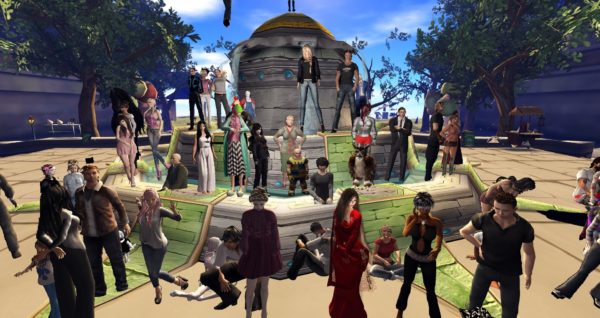
At the time, enthusiasm grew quickly but the “Wow” effect was short-lived. The principle was to have an Avatar (a sort of projection of ourselves, but with the characteristics we wanted) and to make it evolve in diverse and varied spaces (like a 2nd life). Other games such as the Sims had also ridden this need to have a digital existence, parallel to our own daily life. A Spinoff called Sansar came into being, compatible with PCs and VR headsets. It nevertheless keeps a rather playful dimension, and interaction with other “players” will depend on our ability to communicate in other languages (depending, of course, on the themes we choose in these virtual spaces).
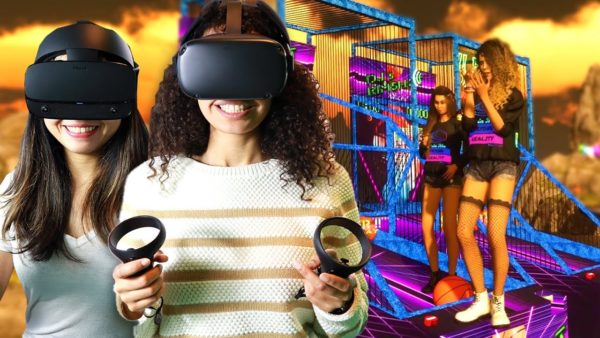
Short intro to Sansar VR, the successor to Second Life:
Recently, there has been a growing interest in moving beyond the playful aspect to create more interactions and so-called “collaborative” spaces. Notably, we saw Microsoft announce “Mesh for Teams”. The use of virtual or augmented reality is at the heart of the Mesh approach. Video presenting Microsoft’s Metaverse:
Here is another video of Mesh, with an introduction by Microsoft’s CEO:
This introduction followed another showcase, by Meta and their Horizon Workrooms solution. The aim is to offer a different use for the Oculus headsets produced by Meta, which, for a very affordable price, give everyone access to this new way of connecting to the Internet and give a whole new meaning to virtual reality. For now, it is only possible to do VR, not augmented reality. This could nevertheless change in the future, with the evolution of future headsets or glasses dedicated to this kind of space.
Intro to Horizon Workrooms:
The question we may ask ourselves is: can we really “work” in these environments? I wanted to give it a try, and here is my own test video of Meta’s environment. Impressions:
In short, can we picture ourselves there?
We can clearly feel that we are at the very first, faltering beginnings of this kind of immersive experience. But there is no doubt that we will see these modes of escapism or “collaboration” become widespread over time. What remains off-putting: the weight of the headsets, the heat on the face, eye strain. There is still progress to be made, but the results are already noticeable. We are witnessing the birth of a new digital mode. Science fiction only yesterday, but already part of our reality today.