Crypto-currency wallets: the JuBiter solution
· Michel Aguilera

Since the emergence of crypto-currencies, the need to be able to store our various cyber-currencies securely has become imperative. There are several ways of doing this, but today we are going to look at one of the so-called “physical” wallets on the market, namely the JuBiter from FEITIAN. A quick overview of the product and of the subject of crypto-currencies.
Money…but not physical!
The subject of crypto-currencies arouses interest, mistrust or curiosity. It is impossible to ignore, especially as most financial institutions are trying to come up with a response using so-called traditional currencies. But how does a crypto-currency work?
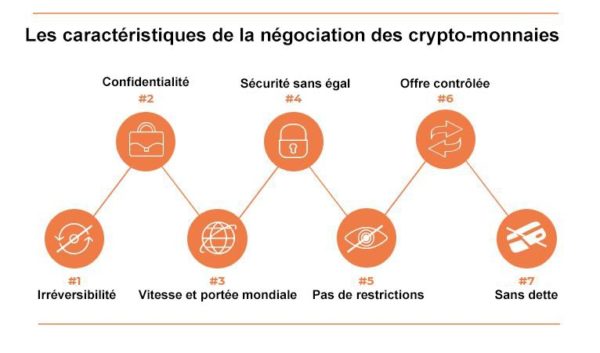
Crypto-currency has many definitions. A crypto-currency can be defined as a digital currency created from computer code. A crypto-currency can also be defined as a chain of data encoded to represent a monetary unit.
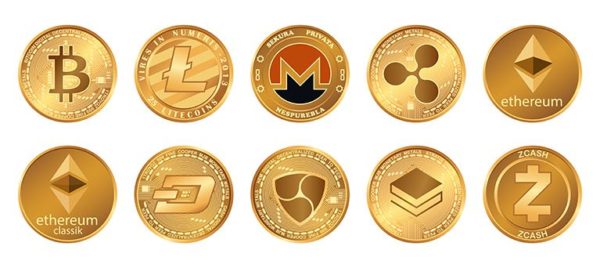
Crypto-currencies are also known as digital currencies. There are many crypto-currencies, the most popular being bitcoin. Unlike traditional currencies, crypto-currencies are exempt from government regulation and manipulation. They are monitored by dedicated Internet protocols (Peer-to-Peer or point-to-point).
To get a first experience and understand crypto-currencies in more detail, I recommend this Youtube channel (in French): (155) Buying your first bitcoins | Beginner tutorial #1 - YouTube
Crypto-currencies have no regulatory body, that is to say a government or central bank that can create or influence their supply or demand. Each transaction arrives in a digital crypto-currency wallet. The holder of the wallet password owns the amount of crypto-currency shown in the general ledger. If we look at Bitcoin in particular, we can speak of the first decentralised form of digital money that has no central government or controlling body. Bitcoin is intended to be held by the entire Bitcoin community. This prevents any manipulation by an organisation wanting to play on speculation. To store the result of a transaction (and therefore our notion of a wallet), we can rely either on so-called software solutions or on devices dedicated to this function. This is precisely the purpose of JuBiter.
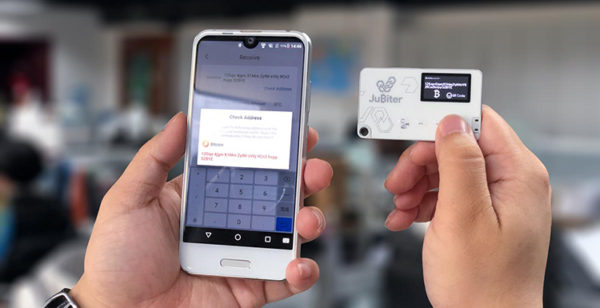
JuBiter Blade is the first model in the JuBiter range of hardware crypto-currency wallets. It aims to offer extreme security to protect crypto assets without sacrificing too much usability. JuBiter Blade uses a CC EAL6+ secure element working with dual data communication interfaces (USB + BLE) to offer secure crypto-currency transactions for all the main platforms. Here is an unboxing video (in English) of the product:
As you can see, the contents of the box are minimal. But this will allow us to start using our Wallet quickly. Once you have switched on your Jubiter, you are invited to pair it with a smartphone (Android or iOS).
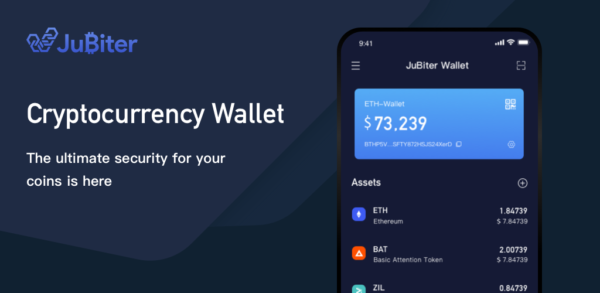
To do this, you will need to install the Jubiter App on your smartphone and then follow the pairing steps. Once this is done, all transactions will be saved automatically on the Blade, which also allows them to be restored if you change smartphone. To illustrate this, here is a short video I made with my own Jubiter:
In short…are crypto-currencies any good?
Of course, this means getting a device that will complement what we may have on our mobile phone and provide a sort of physical backup outside the smartphone, giving us a way to restore our Wallet if necessary. The approach is elegant but, above all, very well thought out in terms of security. To consult Feitian’s flyer on the Jubiter, follow this link.