IT & AIInfrastructure & networking
Mini-sized computing: barebones and other solutions
· Michel Aguilera

For several years now, I have been using computers of all kinds, but with the need to increase the number of machines in my lab environment, the choice to reduce not only power consumption but also the space taken up became obvious. So I had to adopt barebone-type computers. Here is an article about this kind of computer: “mini” in size but maxi in power. An overview.
Small… but mighty!
Barebone computers, also known as mini-PCs, have become popular in recent years by offering users the possibility of creating customised configurations tailored to their specific needs. These compact, upgradable systems come with a basic infrastructure, generally comprising a case, a motherboard and a power supply. In this article, we will explore the advantages of barebone PCs, their configuration possibilities and the common uses associated with them. One word to define this type of PC: versatility.
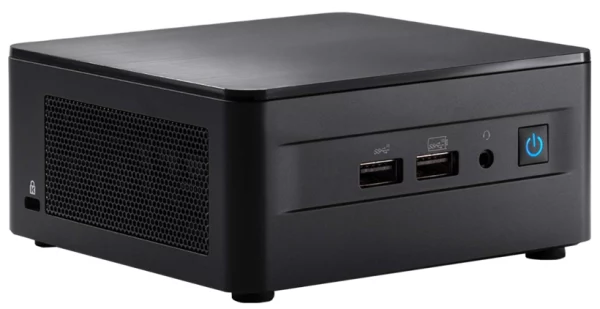
Barebone PCs have several advantages over traditional pre-built computers. First of all, they offer exceptional flexibility in terms of customisation. Users are free to choose their own components, such as the processor, memory, storage and graphics card, to create a tailor-made configuration that meets their specific requirements. This modularity also makes upgrading easy, allowing users to upgrade their components as their needs evolve. The small size also brings an advantage: you can place these machines practically anywhere. Thanks to their adaptability, barebone PCs find their place in a variety of areas: desktop computers, a Media Center system in the living room, a mini-server or even an industrial machine (depending on the type of case used). Here is a video covering some of these uses:
Here is a suggested configuration (thanks to Protocol Digital Informatique for the model used) for an office-type barebone. Expect to pay a little under 600 CHF (Windows 11 Pro licence included):
If I had to list a few points defining the advantages of a barebone PC, I would list the following arguments:
-
Compact size and ease of assembly: barebone computers stand out for their small form factor, which makes them ideal for confined spaces or when portability is a priority. Their modular design also makes the assembly and repair process easier, giving users the possibility of customising their configuration and changing components more easily than in a traditional desktop computer.
-
Component flexibility: one of the key advantages of barebone computers is the possibility of choosing the components that best meet your needs. You can select the processor, the amount of memory (RAM), the type and capacity of storage, as well as connectivity options such as USB, HDMI or DisplayPort ports. This makes it possible to get a configuration suited to specific tasks, whether for office use, multimedia, gaming or even as a home server.
-
Performance and upgradability: despite their compact size, barebone computers offer competitive performance. Thanks to the high-end components you can choose, such as powerful processors and dedicated graphics cards, these mini-PCs can run demanding applications and deliver a smooth experience. What is more, their upgradability means components can be upgraded as new technologies become available, thereby extending the life of your system.
-
Varied uses: barebone computers are suitable for many types of use. They are perfect for productivity tasks such as browsing the Internet, office work and light photo or video editing, and can also serve as a multimedia centre for streaming high-definition content. Thanks to their versatility, they can also be used as home servers, surveillance systems, Wi-Fi access points or compact gaming stations.
In short: cut out for the job… despite the size?
Barebone computers offer an attractive solution for those who want a customised, compact and versatile configuration. Their ease of assembly, component flexibility, competitive performance and multiple uses make them an interesting choice for individuals and professionals looking for an IT solution suited to their specific needs.