IT & AIInfrastructure & networking
Virtualisation, or what’s new
· Michel Aguilera

The subject is particularly vast. We will look at solutions that position themselves as competitors to the big commercial solutions, such as VMware or Microsoft Hyper-V. A discovery of alternative virtualisation solutions.
Let’s virtualise some machines!

Virtualisation systems are legion and are one of the many ways of building data centres. These products make it easy to manage the provisioning of virtual machines (Windows, Linux or other), whether servers or virtual PCs, in order to make them available to end users. The goal is to make the most of hardware resources, which are, most of the time, under-used. Through virtualisation, we can not only make the best use of all hardware resources but also make sure certain environments are maintained for longer (very useful for avoiding the obsolescence of applications or OSes).
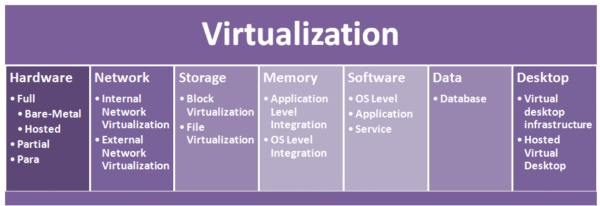
Using hypervisors can today be considered the normal way of deploying servers in companies. This allows not only easier administration but also better control over hardware usage and over the prerequisites of application environments.
To get an idea, here is a video in French from Microsoft (it is a bit dated, but the explanation is still relevant), to give you a clear overview:
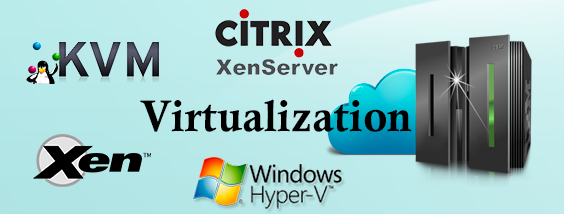
Among the big names in virtualisation solutions, we can mention:
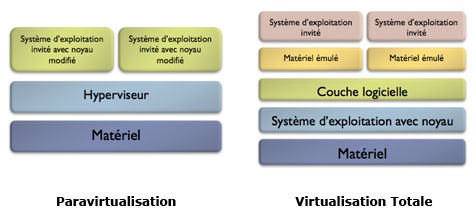
To better understand how virtualisation works, you need to distinguish between virtualisation and paravirtualisation:
At this stage, the choice will depend above all on the type of environment you have to maintain (operating system versions and business applications).
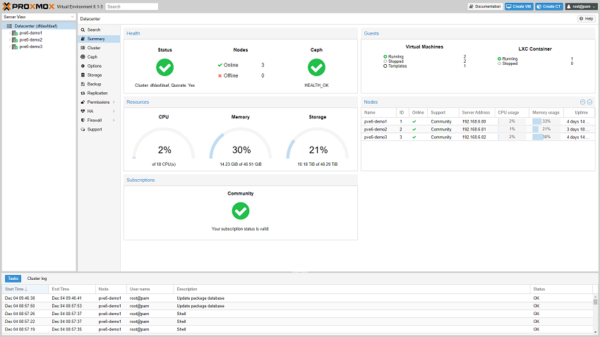
We are going to look at a competitor to the solutions mentioned above: Proxmox. This solution offers various advantages, notably being free and providing built-in high availability, container management and backup features, at no extra cost.
A short intro video (in English) on the product:
Developments in virtualisation today are mainly focused on support for operating systems (constantly evolving) but also on support for containers (Microsoft Nano Server, Docker or LXC). The container concept makes it possible to drastically reduce the space needed to run services or complete applications.
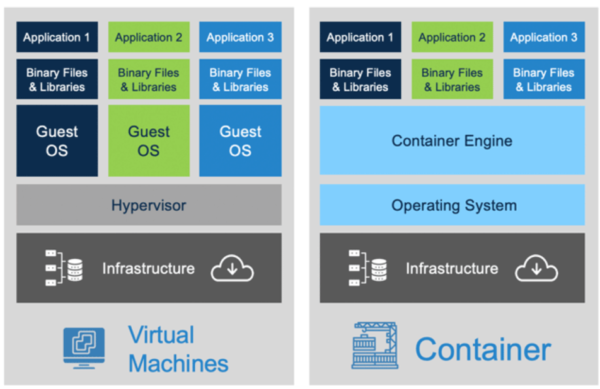
Here is a video (in English) from Microsoft explaining the use of Nano Server (a specific version for system containerisation):
We are now at the 2019 version of the product, which is part of Microsoft’s server product development roadmap.
Now let us look at Docker. This is also a container system, with the option of a store to retrieve fully ready-made environments for simplified operation. The term “Docker” refers to several things: an open source community project, the tools resulting from this open source project, the company Docker Inc., which is the main backer of this project, as well as the tools the company officially supports.
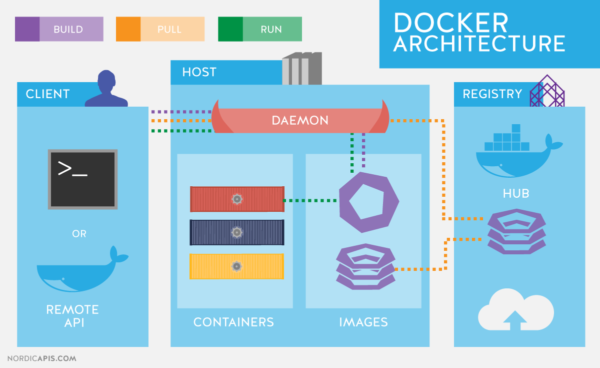
You can treat containers as very lightweight, modular virtual machines. In addition, these containers give you great flexibility: you can create, deploy, copy and move them from one environment to another, which lets you optimise applications for portability (on-premise or cloud environment). Here, virtualisation brings us a new dimension: deploying virtual machines as if we were installing apps on our smartphones (with complex elements simplified into a single box). To help you get familiar with Docker, here is an introductory video (in French) that explains the concept well:
What is also very interesting is the ability to manage versions across the various changes you may make to a container, without having to redo a whole installation of the virtualised system.
In short, is it virtualised?
We are dealing with an approach that changes our perception of how an IT estate is managed. Installations are done at top speed, without having to worry about resources or dependencies any more. Infrastructure management has been simplified to the point where only the concern for how the applications run has become what matters most when bringing a working environment online.